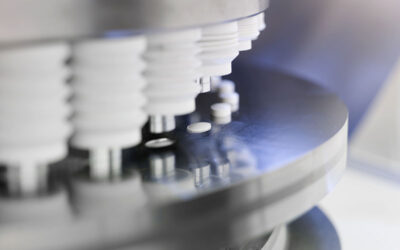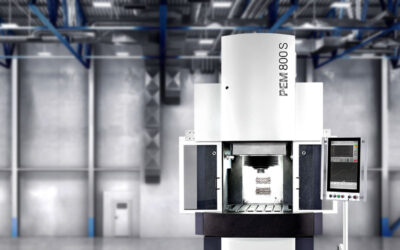
The PEM process is a further development of electrochemical cavity-sinking. Thanks to an innovative machine concept and improved process guidance – both developed in-house at PEMTec – it has been possible to significantly extend and improve the application possibilities associated with the conventional ECM cavity-sinking process.


Influenced by the electric field, the ions move depending on their charge
towards the polar-charged electrodes. By absorbing or discharging their
electrons, they in turn cancel out their charge. The metal ions forming on
the anode and reacting with the electrolyte solution combine with the
hydroxide ions in the electrolyte solution. In a subsequent chemical
reaction, they are discharged as not readily soluble hydroxide.


The reaction at the cathode also causes the used hydroxide ions to
be delivered. The ions of the dissociated electrolyte are not involved in
the chemical reactions but have the task of guaranteeing sufficient
conductivity in the solution. Electrolytical erosion of metal only involves
electric energy and water. No material erosion takes place at the
cathode; only hydrogen gas develops.


 next page


English